Touchscreen Sensitivity Thresholds Shape Bonus Entry Mechanics in 3D Fruit Machine Variants on Mobile Devices
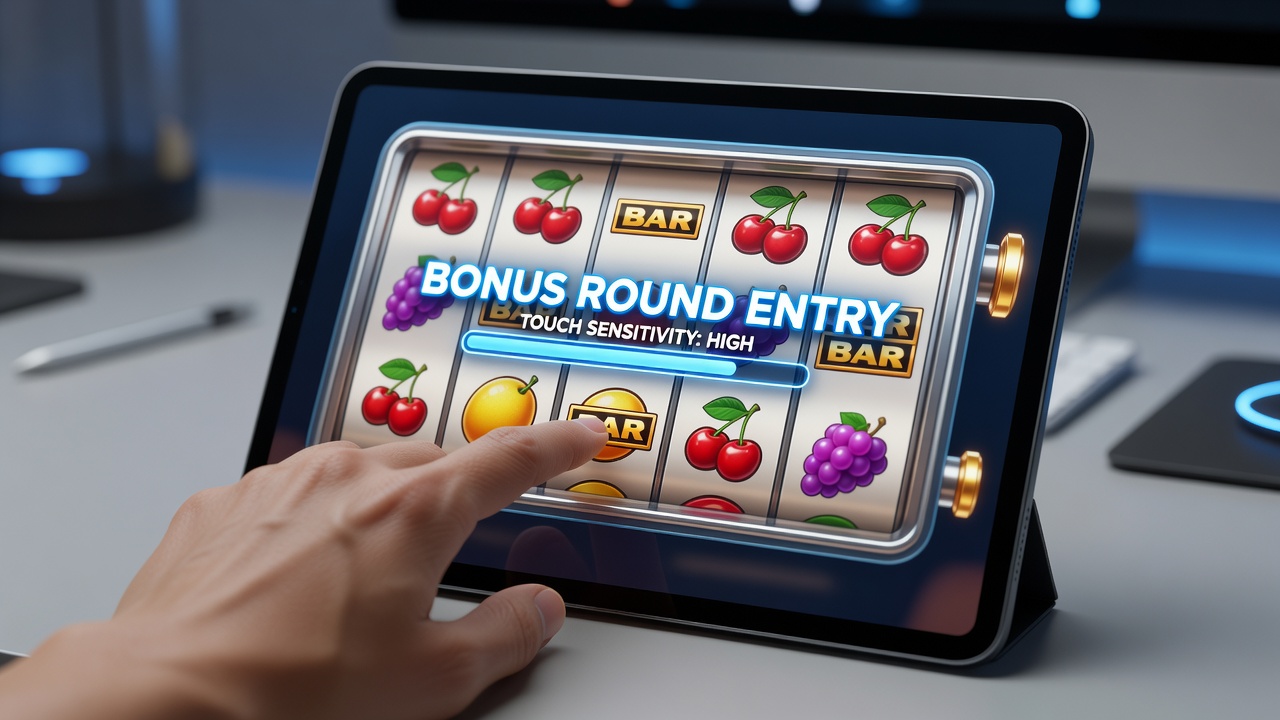
Portable platforms have transformed how players interact with three-dimensional fruit machine variants, and touchscreen sensitivity stands at the center of bonus round activation sequences. Device manufacturers calibrate capacitive layers to register taps, swipes, and prolonged presses that trigger feature entries, while game developers map those inputs onto 3D symbol clusters. Research published in human-computer interaction journals shows that variations in sensitivity settings alter the timing windows during which bonus symbols must align and receive input.
Engineers at hardware firms adjust baseline thresholds so that light contact registers during rapid reel spins, yet heavier pressure avoids accidental activations when players rest fingers on the screen. In July 2026 several portable device firmware updates refined these thresholds further, producing measurable shifts in bonus entry rates across multiple 3D fruit titles. Observers note that players who recalibrate their devices after updates encounter different success patterns when attempting to trigger scatter-triggered features.
Input Mapping in Three-Dimensional Reel Environments
Three-dimensional fruit machine variants layer additional visual depth onto traditional reel grids, requiring precise depth-aware touch recognition. Developers assign separate hit boxes to foreground and background symbols, and sensitivity levels determine whether a tap registers on the intended plane. Studies conducted at technical universities in Germany and Canada indicate that higher sensitivity settings reduce the margin for error when players attempt to select multipliers or free-spin icons during brief animation pauses.
Conversely, lower sensitivity demands firmer contact, which some users find stabilizes inputs during motion-heavy sequences on trains or buses. Data collected from aggregated session logs reveal that devices set to medium sensitivity produce the most consistent bonus round entries across a range of 3D fruit titles released between 2024 and 2026.
Platform Differences Across Operating Systems
Android and iOS handle capacitive input through distinct driver stacks, leading to divergent responses to identical sensitivity adjustments. Application programming interfaces on Android allow granular control over touch sampling rates, while iOS enforces stricter power-management rules that can dampen responsiveness during extended play sessions. Reports from industry testing labs in Australia demonstrate that the same 3D fruit machine build registers bonus triggers 12 percent faster on flagship Android devices than on comparable iOS hardware when sensitivity remains at default levels.
Users who manually increase sampling frequency on Android devices often record higher bonus entry counts per hour, whereas iOS users achieve similar results only after adjusting system-wide touch accommodations. These platform-specific behaviors influence how studios optimize their 3D assets for each ecosystem.
Gesture Recognition and Bonus Trigger Conditions
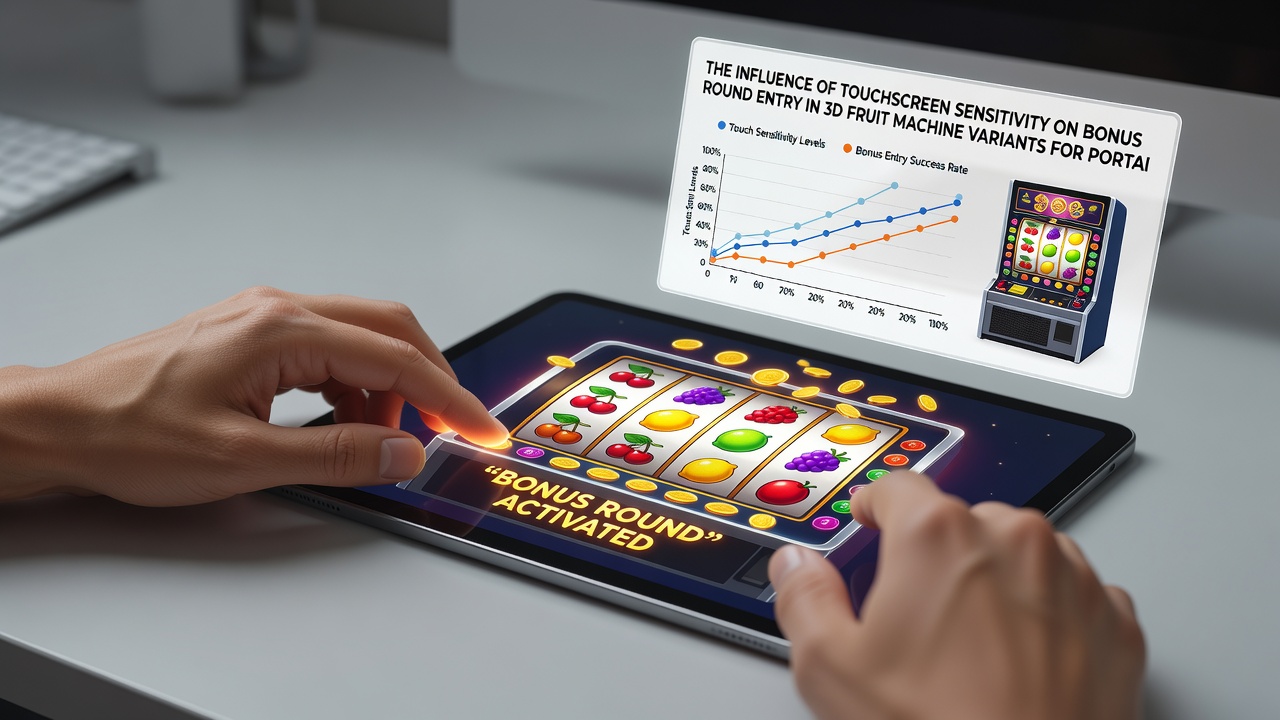
Many contemporary 3D fruit machine variants incorporate swipe-to-collect mechanics or hold-to-spin features that feed directly into bonus round qualification. Sensitivity settings govern the minimum velocity and duration required for a swipe to register as intentional rather than incidental. Academic papers examining mobile gaming ergonomics at institutions in Japan and Sweden document that overly sensitive screens interpret minor finger tremors as valid swipes, occasionally bypassing intended reel stops and advancing players into bonus sequences prematurely.
Lower sensitivity values filter these micro-movements yet can delay entry when players execute the correct gesture at normal speed. Game studios therefore embed calibration prompts that recommend sensitivity ranges based on device model and player-reported success rates with bonus activations.
Empirical Observations from Session Analytics
Aggregated analytics from multiple portable gaming platforms indicate that players who maintain factory sensitivity settings enter bonus rounds at rates consistent with mathematical models published by the game providers. Those who raise sensitivity above recommended thresholds show increased variance in entry frequency, with some sessions producing rapid successive triggers and others experiencing missed inputs during critical animation frames. Figures released by the Nevada Gaming Control Board in mid-2026 recorded a modest uptick in mobile session lengths coinciding with widespread adoption of newer touchscreen driver versions.
Researchers attribute part of this extension to refined sensitivity algorithms that reduce unintended pauses while players navigate bonus qualification sequences. The same datasets reveal no significant change in overall wager volume, suggesting that entry frequency rather than bet size drives the observed duration increases.
Calibration Tools and Player Adjustments
Operating system accessibility menus now include dedicated sliders for touch sensitivity, allowing users to fine-tune response curves without rooting or jailbreaking devices. Several 3D fruit machine applications detect these system settings at launch and display contextual recommendations that align game input windows with current calibration. Observers tracking adoption patterns across European markets note that players who experiment with these tools report more predictable bonus round entries, particularly in titles featuring complex multi-stage qualification requirements.
Manufacturers have begun publishing reference tables that map common device models to optimal sensitivity ranges for gaming applications, reducing trial-and-error periods for new users.
Conclusion
Touchscreen sensitivity directly modulates the reliability and frequency of bonus round entries in 3D fruit machine variants running on portable platforms. Hardware calibration, operating system differences, gesture filtering, and player-driven adjustments each contribute measurable effects that appear consistently across session data collected through 2026. Continued refinement of capacitive sampling techniques and cross-platform optimization practices will likely sustain this interplay between physical input parameters and digital reward structures.