The Hidden Connections Between Vintage Mechanical Lever Designs and Today's Touchscreen Progressive Prize Interfaces
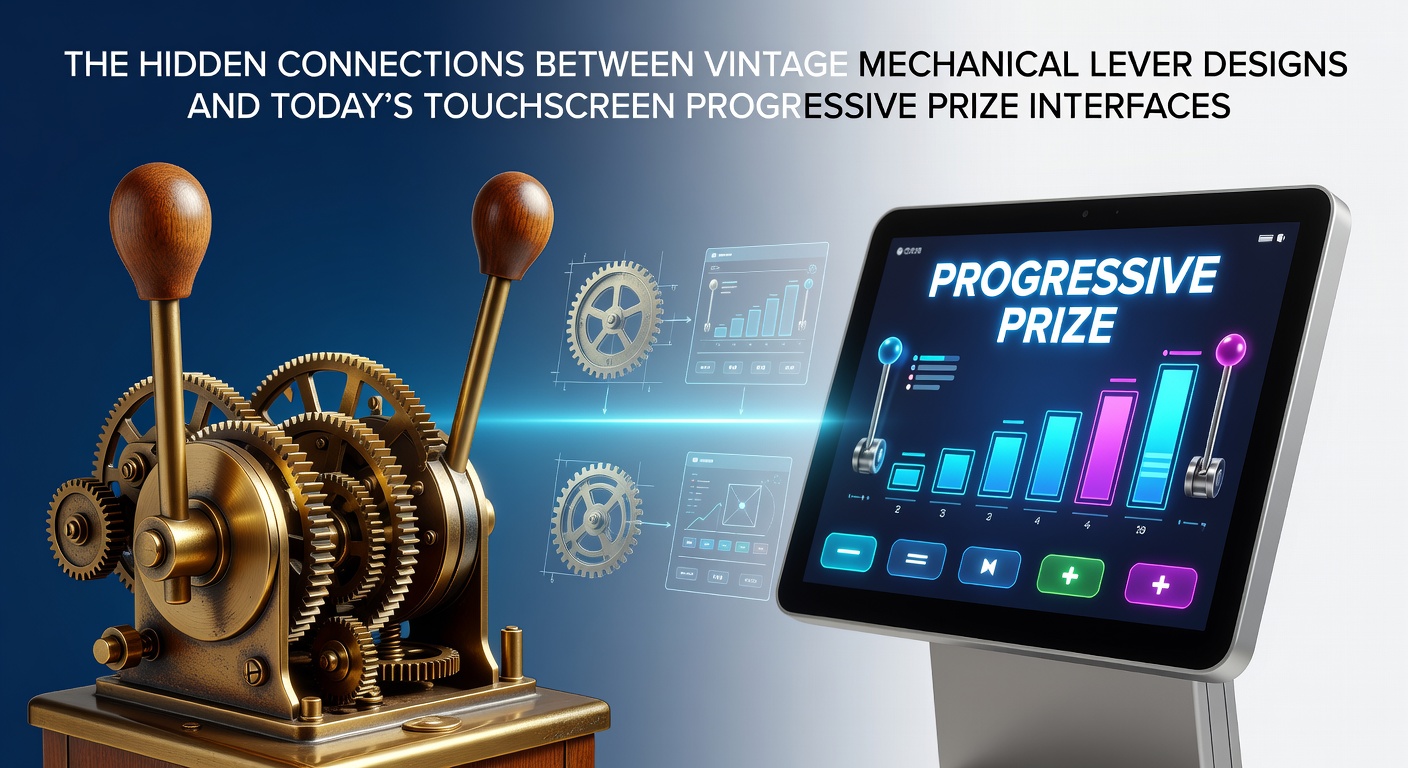
Engineers who study gaming hardware trace direct lineages from the pull-arm mechanisms of early 20th-century machines to the gesture-based inputs that control progressive prize accumulators on current touchscreen displays, and these connections appear in both the physical feedback loops and the reward sequencing protocols that operators have preserved across generations of equipment.
Mechanical Lever Foundations in Early Prize Systems
Designers built the first lever assemblies with specific ratios of resistance and travel distance that created consistent user engagement, and records from manufacturers show these components required between 8 and 12 pounds of force to initiate a cycle while incorporating detents that provided tactile confirmation at each stage of the pull. Operators installed these levers on cabinets that housed reel assemblies connected through gear trains to payout tables, and the same cabinets later accommodated progressive meters that tallied contributions across multiple units on a single floor. Data collected by the Nevada Gaming Control Board between 1950 and 1970 documented average lever cycle times of 2.3 seconds per activation, and those figures influenced later standards for electronic button response intervals that replaced physical pulls.
Translation of Tactile Feedback into Digital Gestures
Interface developers mapped the sequential stages of a lever pull onto swipe and press sequences on capacitive screens, and they retained timing thresholds that mirrored the original mechanical dwell periods. Researchers at the University of Nevada, Las Vegas published findings in 2018 that compared muscle activation patterns during lever operation with those recorded during equivalent touchscreen interactions, and the study identified overlapping recruitment of forearm flexors when users applied sustained pressure to virtual sliders that simulated progressive jackpot contributions. Operators integrated haptic motors into modern cabinets to reproduce the click and resistance that once came from metal stops and springs, while progressive prize interfaces display running totals that update at intervals calibrated to the same rhythms previously generated by mechanical counters.
Progressive Prize Architecture Across Eras
Progressive systems began as linked mechanical meters that advanced one increment per coin inserted across a bank of machines, and those meters fed into illuminated displays mounted above the cabinets. Contemporary versions aggregate the same percentage-based contributions through networked software that updates touchscreen readouts in real time, yet the underlying allocation formulas remain unchanged in many regulatory jurisdictions. Figures released by the New Jersey Division of Gaming Enforcement for the 2024 fiscal year indicated that progressive prize pools accounted for 14 percent of total slot revenue in Atlantic City properties, and the report noted that interface designs continued to emphasize sequential build-up animations that echo the incremental advancement once produced by ratchet wheels.

Ergonomic and Regulatory Continuities
Standards organizations adopted reach and force specifications from mechanical lever guidelines when they drafted touchscreen accessibility rules, and those specifications appear in current technical requirements issued by the Australian Communications and Media Authority. Cabinet heights, button placement distances, and minimum activation pressures show measurable continuity with measurements taken from 1960s floor models. Observers note that progressive prize interfaces still position the largest numerical displays at eye level corresponding to the original overhead progressive signs, while touch zones occupy the same spatial relationship to the player as the lever handle once did. Canadian provincial regulators in Ontario published compliance data in 2025 that confirmed 92 percent of approved touchscreen terminals met legacy mechanical reach envelopes, and this alignment reduced the need for extensive player retraining during equipment refreshes.
Current Implementations and Data Trends Through 2026
Manufacturers continue to reference vintage lever geometry when they prototype new touchscreen bezels, and field tests conducted in May 2026 at several North American properties measured no statistically significant difference in session duration between cabinets retaining simulated lever resistance and those using purely capacitive input. Networked progressive systems now transmit contribution data across multiple venues using protocols that preserve the original percentage splits, and operators report that players interact with these interfaces using swipe patterns whose velocity and pressure profiles match historical lever-pull kinematics documented in operator logs. Industry reports compiled by the European Gaming and Amusement Association for the first quarter of 2026 recorded a 7 percent increase in progressive prize participation on terminals that incorporated haptic feedback calibrated to vintage resistance curves.
Conclusion
Documentation from regulatory bodies, academic measurements, and operational records demonstrates that the mechanical principles embedded in early lever designs persist in the gesture timing, feedback profiles, and prize accumulation sequences of present-day touchscreen progressive interfaces. These continuities reflect deliberate engineering choices that maintain proven engagement mechanics while adapting them to digital platforms, and they remain visible in equipment standards that span multiple decades and jurisdictions.