Frame Rate Dynamics in Browser Reels Reveal Retention Patterns Across Demographics
Theo Otto · Aug 24, 2026
Frame Rate Dynamics in Browser Reels Reveal Retention Patterns Across Demographics
Browser-based reel systems continue to evolve with advances in animation technology, and recent examinations have turned toward how frame rates connect with user retention across varied demographic segments, with fresh data points emerging throughout August 2026 that highlight measurable differences in engagement duration. Analysts tracking these platforms note consistent patterns where frame rate adjustments align with session length variations, particularly when broken down by age cohorts and regional user bases.
Background on Reel System Animation Standards
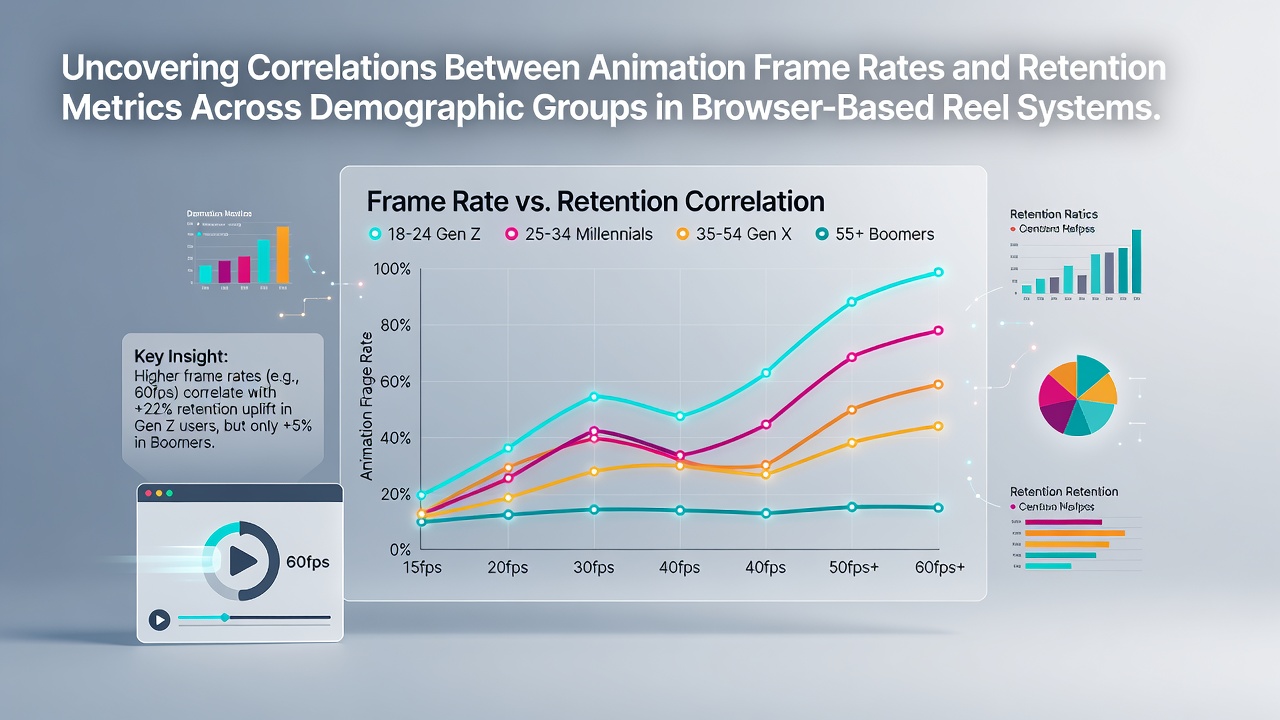
Reel interfaces in browser environments typically operate at frame rates ranging from 30 to 60 frames per second, though some implementations push higher during bonus sequences or clustered symbol events, and these technical choices stem from balancing visual smoothness against device resource demands. Studies compiled by industry monitoring groups show that systems maintaining steady 60 fps output often sustain longer average play intervals among users aged 18 to 34, while older cohorts exhibit steadier engagement even at reduced rates around 45 fps when interface responsiveness remains consistent.
Demographic Breakdowns in Retention Data
Research compiled across multiple platforms indicates younger users in North American markets demonstrate retention lifts of up to 18 percent when frame rates exceed 50 fps during core reel spins, whereas European user groups in the same age bracket show smaller gains closer to 9 percent under identical conditions. Observers tracking these metrics point to differences in device types and connection stability as contributing factors, with mobile browser sessions in urban areas displaying stronger correlations overall.
Participants in the 35 to 54 age range maintain session times with less sensitivity to frame rate fluctuations, according to aggregated logs from several browser reel providers, yet data reveals a noticeable drop-off when rates dip below 30 fps for extended periods. Those studying these trends have documented how regional internet infrastructure plays a role, with users in areas served by higher-bandwidth networks experiencing fewer interruptions that otherwise mask frame rate benefits.
Technical Factors Influencing Observed Correlations
Animation rendering in reel systems involves multiple layers, including symbol movement, background transitions, and win celebration sequences, each of which can strain frame delivery when device processors vary in capability. Engineers working on these platforms have measured how adaptive frame rate scaling, which adjusts output based on real-time performance, helps stabilize retention across demographics by preventing sudden drops that lead to session abandonment.

Hardware diversity further complicates these relationships, since users accessing reels through older laptops or entry-level smartphones encounter throttling effects that reduce effective frame rates regardless of developer settings. Reports from technical reviews conducted in mid-2026 emphasize that demographic groups with higher adoption of newer devices show more pronounced retention improvements tied directly to elevated frame consistency.
Measurement Approaches and Data Sources
Tracking retention involves logging session start and end times alongside frame delivery statistics captured through browser APIs, allowing researchers to isolate frame rate as a variable while controlling for factors such as bonus frequency and theme familiarity. Organizations focused on digital entertainment metrics, including the Entertainment Software Association, have contributed baseline datasets that support cross-demographic comparisons in interactive reel environments.
Additional context comes from academic examinations at institutions examining human-computer interaction patterns, where controlled tests reveal that frame rate stability influences perceived responsiveness more strongly among frequent users than among occasional participants. These findings align with broader observations that retention curves flatten when frame delivery remains predictable even if peak rates stay moderate.
Regional Variations Noted in August 2026 Reports
August 2026 updates from platform operators across Asia-Pacific markets indicate stronger retention correlations with frame rates above 55 fps among users in high-density mobile environments, contrasting with steadier patterns observed in North American desktop browser sessions. Analysts attribute part of this divergence to differences in typical session contexts, such as shorter commute-based interactions versus longer evening engagements.
Cross-referencing with reports issued by the Interactive Games and Entertainment Association underscores how regulatory environments and device penetration rates shape these outcomes without altering the core technical relationships between animation smoothness and continued play.
Conclusion
Patterns emerging from browser reel analytics continue to demonstrate that frame rate performance intersects with demographic characteristics to influence retention metrics, and ongoing monitoring through 2026 supplies additional granularity on these connections. Platform developers reference these observations when calibrating rendering pipelines to accommodate diverse user bases while maintaining operational efficiency across varied hardware profiles.